Razones para poner una silla Panton negra en tu vida. Y cómo distinguirla de las copias

Cómo saber si tu silla Panton es una Vitra original o una copia: la firma, el sello bajo el asiento y las medidas exactas que debes comprobar.

Comedor blanco [] White dinningroom


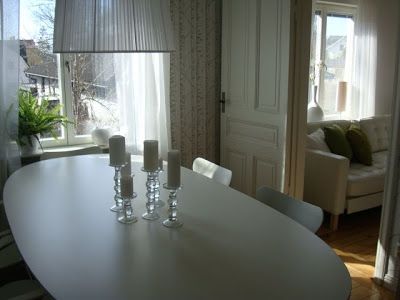
Me gusta mucho la simplicidad de este comedor. Un buen papel en la pared (aunque yo sólo hubiera empapelado una), muebles con líneas simples y diseños impecables (las sillas de la serie 7 de Jacobsen, como siempre, geniales), alguna pieza decorativa para dar personalidad al conjunto (esos candeleros de cristal son una maravilla y también los jarroncitos blancos de Ikea) y el infalible blanco como dueño y señor y aquí tenemos un comedor en el que pasaría horas y horas de sobremesa…
I love the simplicity of this dinnigroom. A beautiful paper in the walls (thought I’d prefer just one wall instead the whole room), simple and good designed furniture (including the amazing series 7 chairs by Jacobsen), some decorative objetcs to give your personal touch (must say I think the glass candlestick collection is perfect; I have the same small white vases from Ikea) and, of course, white all around to give light. I could spend hours and hours here….

Via: Skonahem

Emil Stejnar: lámparas y apliques vintage [] vintage chandeliers & sconces


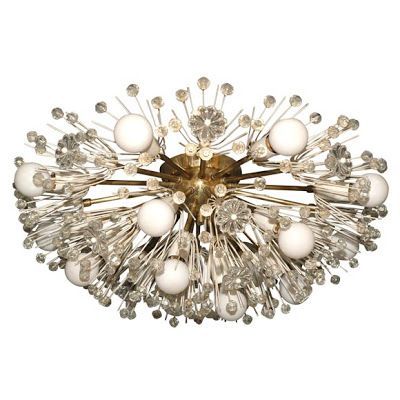
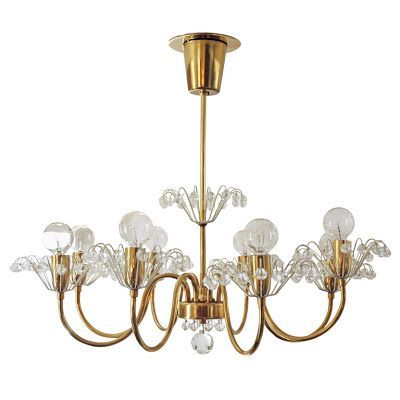
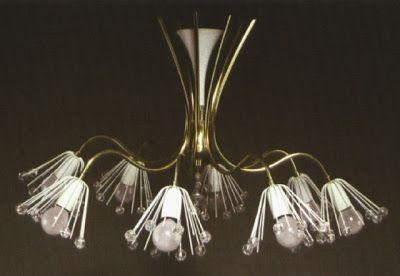
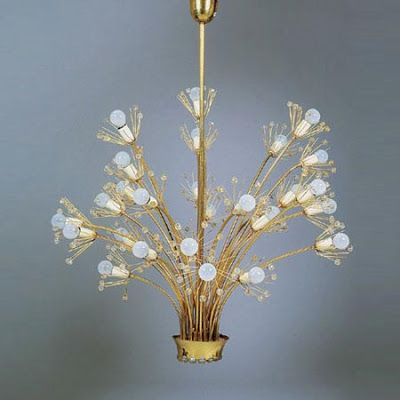
Las piezas bien de cerca para disfrutar de todos los detalles [] Close-up to chandeliers and sconces to see all the details


Poniendo todo su encanto al servicio de decoradores del mundo entero [] Used by interior designers worldwide…
Hacía tiempo que no incluía una entrada sólo de lámparas y los que leeis habitualmente el blog ya sabréis que son mi perdición. Hoy os traigo algunas del arquitecto austríaco Emil Stejnar, de quien no he conseguido apenas datos: nacido en el siglo pasado, sus diseños eran producidos por la firma Rupert Nikoll y se encargó de la decoración del Café Ohne Pause Expresso on Graben de Viena allá por 1955. Poca cosa, la verdad. Ni una reseña en Wikipedia, ni un libro en Amazon… en fin, que tengo miedo que las fuentes, supuestamente «solventes», arrastren algún tipo de error.

I love lamps. If you follow my blog, you probably know that I prefer vintage lamps. So this time I’d like to share with you some of the most beautiful chandeliers and sconces I’ve ever seen. They’ve been designed by austrian architect Emil Stejnar. I don’t know much about him (no way to find anything in Wikipedia, no book in Amazon…): he lived in the XXth century, his designs were produced by Rupert Nikoll and he was in charge of the decoration of the Ohne Pause Expresso on Graben in Vienna in 1955. No much, I must admit. Who knows, maybe my sources are wrong (1st dibs???)

En todo caso, y dejando aparte la inexistente -aún- biografía de Emil Stejnar, sus lámparas me transportan a los sofisticados salones y elegantes cafés de la Viena de mediados del siglo pasado (las que os enseño datan de 1950 a 1960). Latón dorado o lacado en blanco y el cristal son los materiales principales de sus diseños, fácilmente reconocibles por sus «flores» dibujadas a base de tallos de metal rematados con cristales.

Anyway, these chandeliers and sconces bring me back to the most sophisticated and elegant livingrooms and cafés of a mid-century Vienna, when these pieces were created (1950 to 1960). Brass -lacquered in white or not-, and glass are the two main materials chosen to create these so special bouquets-chandeliers. So delicate.

Y como casi siempre, la pequeña batallita: en la última feria de anticuarios que se celebró en Gijón, en 2008, tenían una de estas lámparas (la segunda, exactamente), tirada por el suelo en uno de los puestos, muy sucia y bastante oxidada, así que al final no me animé a comprarla. El vendedor decía que tenía «unos 100 años…» pero no supo darme ni un detalle más, pero eso sí «era muy, muy antigua». ¿No os da que pensar?
And let me finish with a personal story: last year, while visiting an antiques fair in my town, Gijón, I found one of these lamps (the second from the top), but so dirty and rusty that I finally decided not to buy it. The seller tried to convince me by telling me that the lamp was «at least 100 years old»… he couldn’t tell me anything about the designer or where it came from but kept on telling that «it really is a very old piece». That kind of things make me think twice before buying an «antique» again…

Créditos [] Credits: 1. 2. 3. 4. 1st Dibs 5. Gaelle Le Bolicaut 6. Skona Hem via Desire to Inspire 7. Studio Ilse 8. ¿? via Desire to Inspire 9. Artnet 10. Architonic

Silla Cesca [] Cesca Chair – Marcel Breuer (1928)


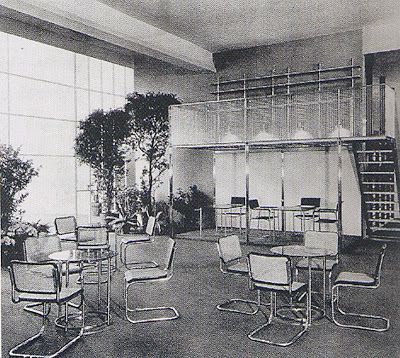
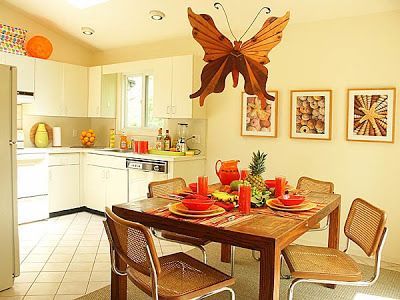
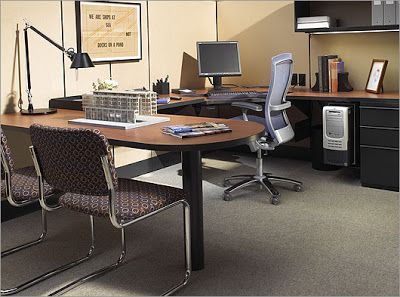
Primero fue la B32 (sin reposabrazos) y después vio la luz la B64 (con ellos), pero ambos modelos pueden presumir de estar entre los diseños de silla más copiados del S. XX. Conocidas popularmente como sillas Cesca, son uno de los trabajos más conocidos de Marcel Breuer (1902-1981). A mí personalmente me fascinan (como casi todas las sillas tubulares en cantiléver) y por eso tengo un par de ellas presidiendo la mesa del comedor. Meras réplicas, casi seguro, pero no por eso menos cómodas y sobre todo, geniales para combinar con muebles contemporáneos y otros mucho más barrocos, por ser piezas sencillas, sobrias y de diseño impecable.

Seguro que estais cansad@s de verlas en muchos sitios y en sus 1000 versiones: con base y respaldo en mimbre o tapizadas, con reposabrazos en tela o de madera… Actualmente la editan Knoll y Thonet , aunque encontraréis mil reediciones «falsas» por internet a precios mucho más asequibles…

Las mías llegaron a casa de casualidad, cuando mis padres estaban a punto de deshacerse de ellas… Las tapicé con un tejido de Gastón y Daniela a juego con las otras 4 de madera que había en el comedor de casa cuando yo era un cría y, la verdad, juntas quedan fenomenal.

Foto: Bauausstellung de Walter Gropius con sillas Cesca mod. B32 de Marcel Breuer. Berlin, 1931 [] Image: Bauausstellung from Walter Gropius displaying Cesca chairs mod. B32. Berlin, 1931.
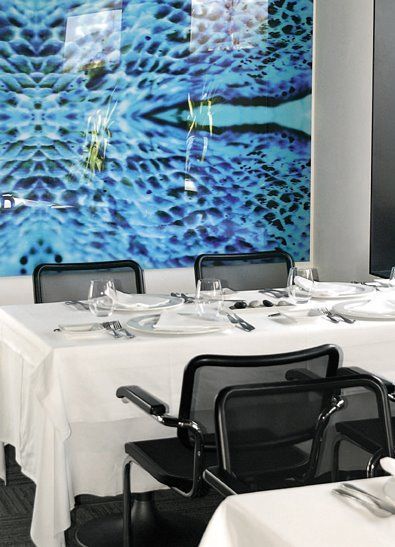
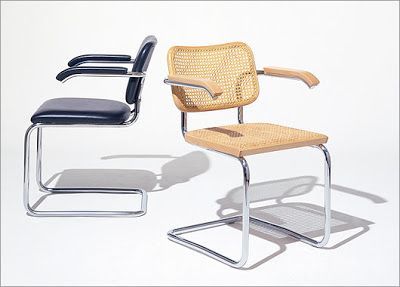
First came the B32 (without arms), and some years later the B64 (armchair), but both chairs are among of the most copied designs in the XXth century… Widely known as Cesca chairs, they are two very popular designs by Marcel Breuer (1902-1981). I personally adore them (as most cantilever tubular chairs), so two replicas – I’m pretty sure they’re not originals- are presiding the dining table at home, as the fit perfectly with contemporary minimal furniture but also with a more sophisticated style.
Nowadays, they are edited by Thonet and Knoll, but you can also find cheaper replicas in the Internet (try in Google images and see it for yourself!).
I have reupholstered mine in a striped colorful fabric from Gaston y Daniela, matching the other 4 vintage chairs from my parent’s former diningroom, that I have also inherited ;). I’m so happy with the result…


Creditos [] Credits: 1.2. Vintage & Chic, 3. 1000 Chairs book, 4. Thonet, 5. 6. 8. Allmodern, 7. Scott Anders

Mod. 1725 A – Warren Platner (1966)


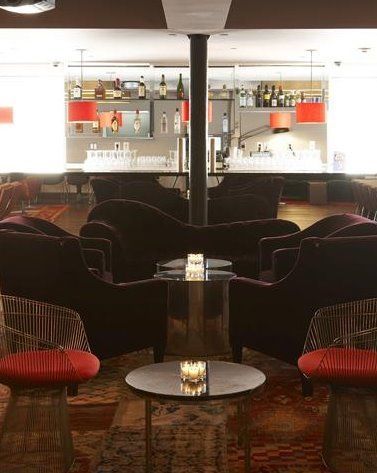
«Como diseñador, era consciente de que había un lugar para el mobiliario decorativo, agradable y placentero, como el surgido en el periodo estilístico de Luis XV… Un clásico es algo que gusta cada vez que se contempla, que se acepta como es y no se sabría cómo mejorarlo» (cita de Warren Platner extraída del libro 1000 sillas de Charlotte y Peter Fiell, Taschen). Esta colección tan escultórica que se sacó de la manga en los años 60 el conocido diseñador estadounidense (1919-2006) es sencillamente increíble y de lo más versátil porque sus líneas puras y sencillas encajan en cualquier estilo decorativo (por cierto, la última imagen es de finales de los 60!). Fijaros qué bien se adaptan tanto a espacios minimal como a otros de lo más recargado… Podéis echar un vistazo aquí y aquí para leer algo más de sus diseños.
«As a designer I was aware there was still a place for decorative and beautiful furniture, like the pieces from the Louis XV style… A classic is something you like everytime you look at it, is accepted the way it is and would be really hard to improve» (quote by Warren Platner extracted from the book «1000 chairs» by Charlotte & Peter Fiell, Taschen). This sculptural collection of furniture was created in the 60s by talented american designer Warren Platner (1906-2006). It’s amazing how the chairs and otomans fit perflectly in any decor style: from minimal to a more sophisticated one… (last image is an vintage original from the 60s). Have a look here to read more about him and his work.

Créditos [] Credits: 1. Alda Pereira Design , 2.Joshua McHugh via Desire to Inspire, 3. Betsey Jonhson, 4 ¿?, 5. Soho House New York warren_platner_chair_sohohouseny_com, 6. Foto Elle Decor via Luphia Loves, 7. S Rusell Groves via Desire to Inspire, 8. Via Susi-a

Sillas tubulares [] Tubular chairs


Un clásico de 1926: la silla Non-Conformist de Eileen Gray (reeditadas por ClassicOn)

The Non-Conformist chair by Eileen Gray, a classic from 1926, (reissued by ClassiOn).
Otro clásico quizá más conocido: el Mod. MR40 de Mies van der Rohe de 1931. Reeditado por Knoll. / Another classic but maybe better known: the MR40 model by Mies van der Rohe from 1931. Reissued by Knoll.
Otra silla de Mies van der Rohe, la MR10, inspirada clarísimamente por la S33 de Mart Stam de 1926 (editada ahora por Thonet), o quizá por la B33 de Marcel Breuer… / Another Mies van der Rohe chair: the MR10, clearly inspired by the S33 by Mart Stam from 1926(reissued by Thonet) or maybe the B33 by Marcel Breuer…
¡Estas son casi idénticas a las de mi cocina! / These are so similar to the ones in my kitchen

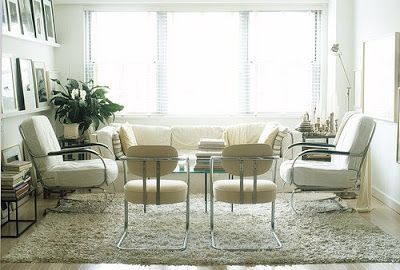
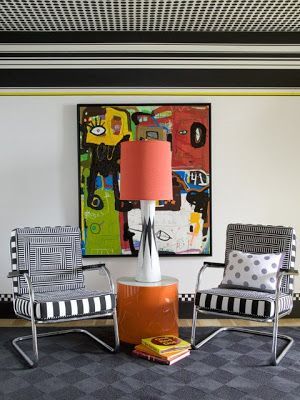
Me fascinan las sillas tubulares con un inconfundible gusto retro y diseños impecables, como las que véis en las imágenes. Con sus cromados bien relucientes, tapizadas al gusto de cada cuál (telas lisas o estampadas, cuero…) y casi siempre en cantiléver, es decir, con forma de S invertida. Claro, así no es de extrañar que tenga cuatro sillas de este estilo en la cocina, dos más presidiendo la mesa del comedor y otras dos repartidas por casa (aunque no exactamente tubulares)… Pero no penséis que es un invento de los 60, no, no; Marcel Breuer y Mies van der Rohe, entre otros, ya diseñaron sus primeros modelos en la década de los felices años 20…
I’m fascinated by retro tubular chairs, like the ones in the photographs. I like the shine of the chromed parts and adore them, no matter the upholstery chosen (plain or patterned fabrics, leather…). My favourite are the cantilever chairs (with an inverted S shape). No wonder we’ve got 4 chairs like these in the kitchen, 2 in the dining room and 2 more in different rooms at home (though not tubulars). And did you know that Marcel Breuer and Mies van der Rohe, among others, made their first designs in the roaring 20s…?
Créditos / Credits: 1., 2. Polly Wredford via Desire to Inspire, 3. Studio Ilse, 4. Brad Ford via Desire to Inspire, 5. Ellie Miller, 6. ¿?, 7. Ken Hayden.

Han hablado de VINTAGE&CHIC